

Our History
PARR project was born in the summer of 2021, sparked by an intuition Alexandra Pierre had while she was working at Relais-femmes. At the time, many projects on racism, intersectionality, and Black women’s health were emerging across both community and academic sectors. However, one thing stood out: the writings, reflections, and knowledge produced by Black and racialized women and non-binary people remained largely absent, overlooked, and hard to access. Not because they didn’t exist — but because they were being made invisible.
This realization gave birth to PARR: a project grounded in community realities, created from the outset as a space to make visible, share, and circulate knowledge rooted in lived experience. It emerged not only in response to a gap but also as a political act — to create a space where those affected by discrimination in collaborative research could come together, identify the challenges they face, and develop strategies for both individual and collective resistance.
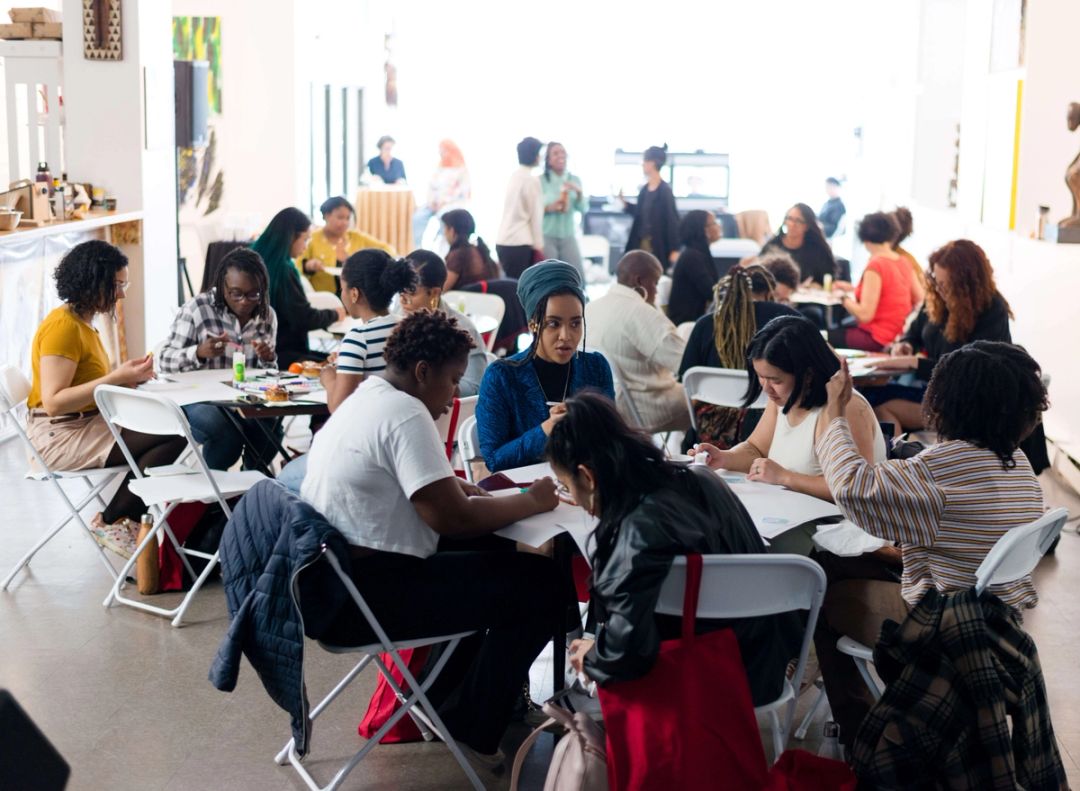
Through transitions, arrivals and departures, the pandemic, and the ever-shifting realities of the community sector, PARR has grown adaptable and resilient. Our activities have expanded: cohort days, panels, a forum, a retreat, a podcast, educational tools... Each step was shaped by the needs voiced by participants. Each space was created to nurture trust, safety, care, and the sharing of knowledge. What emerged, loud and clear, was not only the depth of violence experienced — including invisibilization, tokenization, and isolation, to name just a few — but also the transformative power of solidarity and community.
Over time, it became clear that PARR could no longer remain a project hosted within another organization. The need to build a sustainable space — one inhabited and shaped by those directly concerned — became undeniable. Our decision to create an autonomous organization emerged from a dual impulse: a desire to respond to participants’ needs, and a commitment to build a distinct structure rooted from the outset in anti-racist and decolonial values and principles. These past two years have marked a turning point in PARR’s evolution, as we begin our transition into a fully structured organization. This shift has been made possible by the collective momentum of our participants, the dedication of our team, and the administrative support of Relais-femmes.
Our goal is to build an organizational structure that reflects the values of our communities and members, while responding to the needs expressed by researchers and participants across all fields and research approaches. The urgent need for spaces of reflection and renewal in identity-specific settings — spaces that allow us to move beyond mere survival in the research community — remains central to our vision.
Today, PSRR is more than a project. It is a living community, a political space, a garden where knowledge takes root and flourishes. It is a collective response to systemic violence — but also an invitation: to do things differently, to build spaces that heal, connect, and transform.
Our mission, vision and values
Mission
We support the self-determination of Black and racialized women and people with marginalized gender identities engaged in research — whether in academic, community-based, activist, or fieldwork settings.
As directly affected individuals, we work to make our knowledge visible, break our isolation, and transform research spaces into sites of healing and solidarity.
We create identity-specific spaces for learning, connection, and the co-creation of resistance strategies among people with shared experiences.
Vision
We imagine a world where Black and racialized women and people with marginalized gender identities can conduct research grounded in their lived realities, shaped by their own expertise, and fully recognized for its value.
Research that is more flexible, decolonial, and rooted in living communities.
Research that heals and transforms.PSRR lights the way toward a research landscape where healing, self-determination, and transformation are possible.
We aim to create spaces where everyone can exist fully, share their knowledge without fear, and contribute to meaningful change.
Values
Our core values — community trust, collaborative solidarity, and transformative justice rooted in self-determination — are not just guiding principles; they are the driving forces behind everything we do. It’s crucial for us to embody these values in the way our organization operates. They challenge us to ask difficult questions, confront and unlearn our own biases, and stay committed to ongoing learning and openness.
1. Community Trust
Community trust lies at the heart of everything we build. It fosters spaces where we can authentically be ourselves, free from judgment and instrumentalization. At PSRR, we uphold this trust through identity-specific spaces, care practices, resistance to productivity-driven pressures, and a sincere respect for difference.
In a world where oppression divides and isolates, cultivating trust becomes a powerful act of collective resistance. Rooted in reciprocity and the acknowledgment of lived experiences, this trust allows us to forge lasting connections and face challenges together.
2. Collaborative Solidarity
For us, collaborative solidarity is both a political commitment and an intentional practice. It takes shape through horizontal alliances where power dynamics are actively examined and challenged. This solidarity is woven into the co-creation of our activities — by listening to situated knowledge and honouring individual rhythms and experiences.
By creating safe spaces where marginalized people can choose how they engage, we help foster enduring solidarities that transform both our relationships and the systems that shape our lives.
3. Transformative Justice and Self-Determination
Our goal is not only to shed light on injustice and repair harm, but to transform the systems that perpetuate it. At PSRR, transformative justice means creating spaces where Black and racialized women, as well as people with marginalized gender identities, can assert their rights, redefine their place, affirm their values, and thrive despite systems of domination.
It is a form of justice grounded in lived experience, respectful of specificity, and committed to restoring people’s agency — both individually and collectively.
Our Team
This section honours the individuals who, in their own ways, have helped PSRR grow—from a project into an established organization.
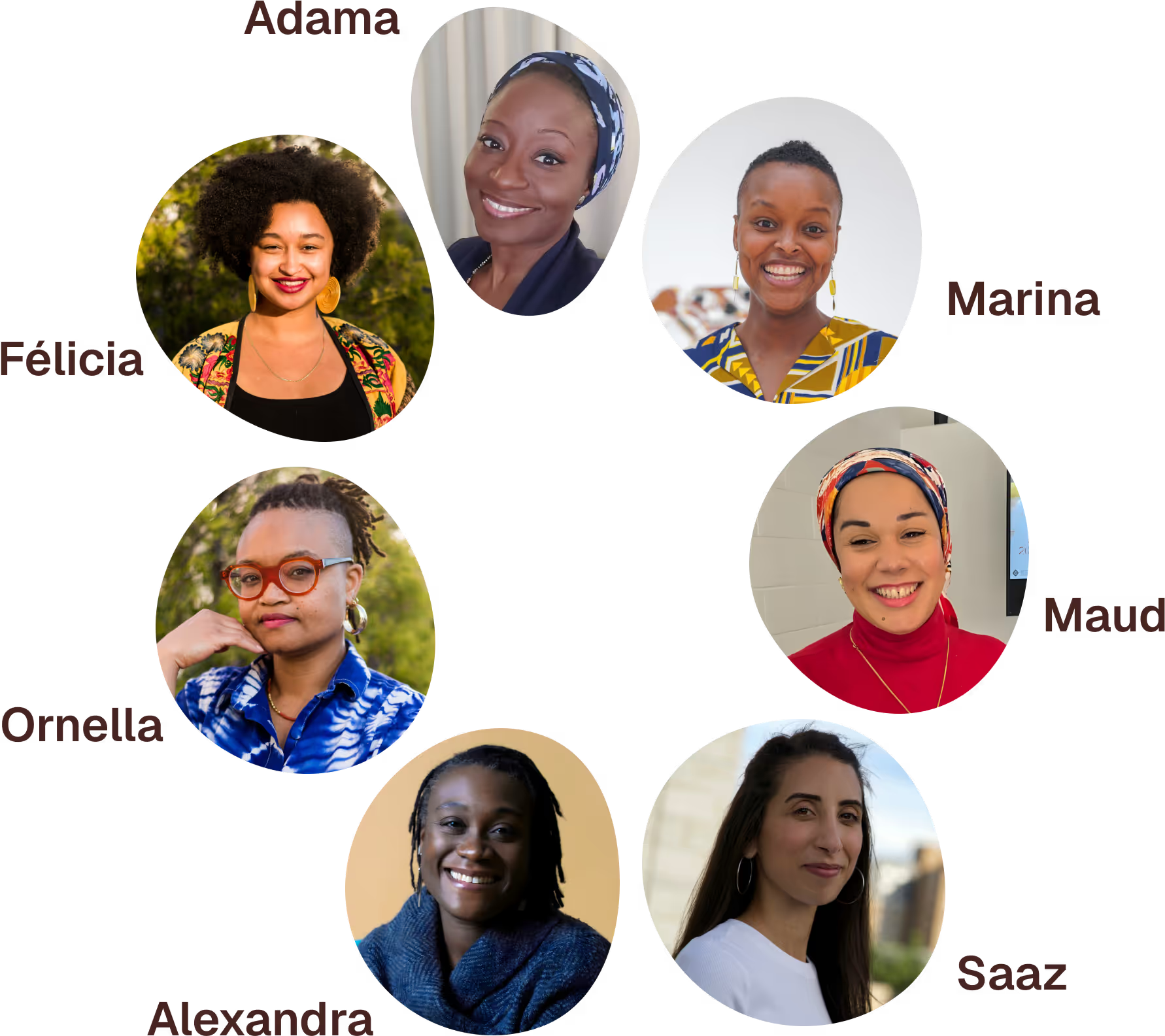
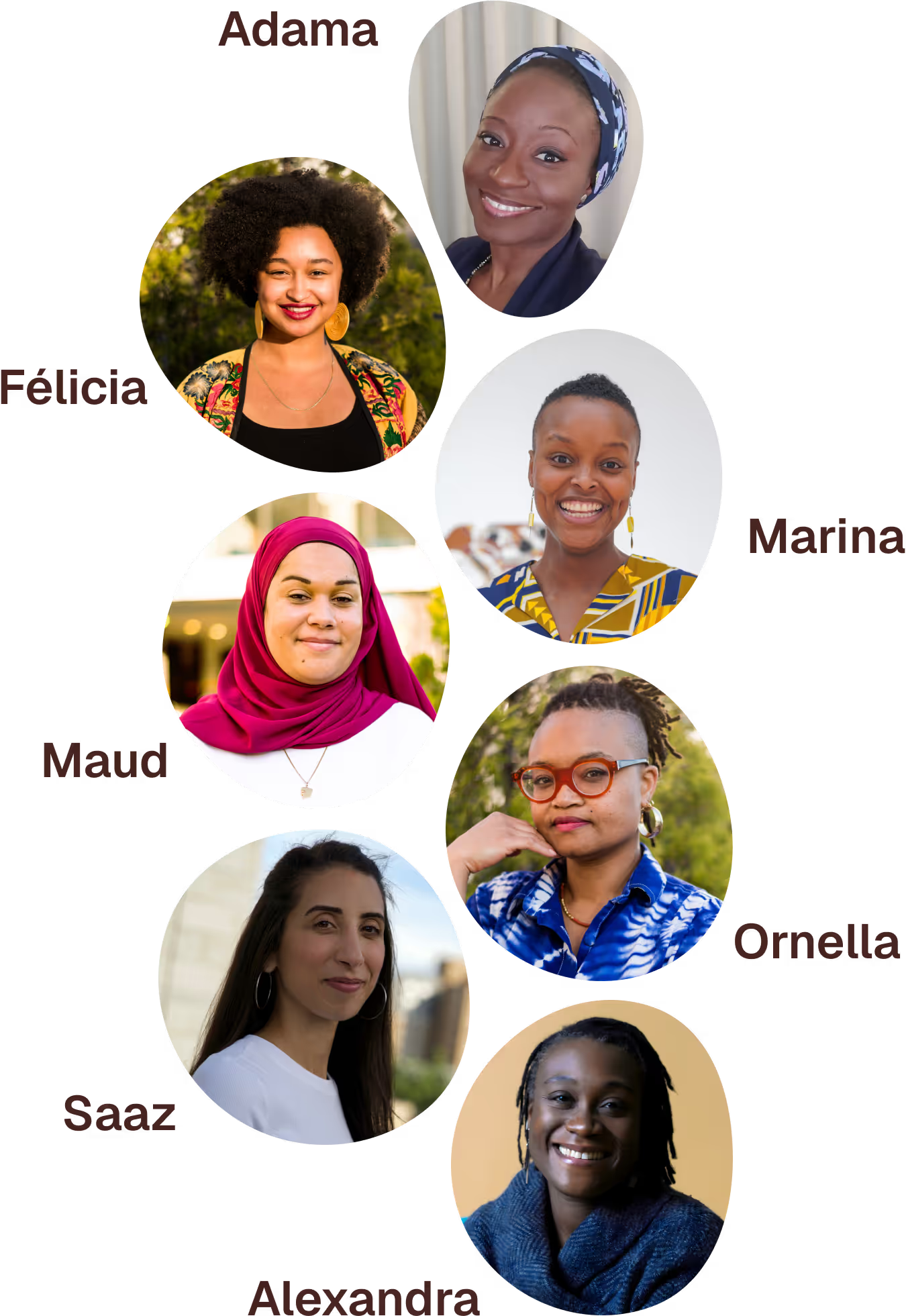
I’m currently the Assistant Coordinator at PARR. I first got involved as a participant, then a member of a working group on ethics, which then led me to facilitate the BIPOC Days on building solidarity across communities. Whether I was facilitating or participating, I’ve learned so much from being in these spaces.
I come to this work as a community educator, curriculum developer, and a researcher. It has been both a pleasure and an honour to put my skills and experiences at the service of a community that is dear to me. One moment that deeply affirmed my commitment to this work was the PARR retreat. In research, we are often expected to produce knowledge in rigid, formal ways. But the retreat offered a space where well-being was truly centered, where knowledge was embodied, shared, and lived. That experience reminded me that other ways of knowing and being together are not only possible – they’re necessary.
Looking ahead, I’m excited to see PARR grow on its own terms. I look forward to seeing our reflections take root in concrete ways. I envision a space that doesn’t replicate the harms we’ve experienced elsewhere – a place where research and life are intertwined, and where care, learning, and joy are central. My approach to this work in three words: kinship, solidarity, and love. And those same values are what bring me joy and balance outside of this work—genuine, healthy relationships, and being grounded in community.

Alexandra Pierre is a member of PARR's Board of Directors, having been one of the initiators of the first version of the project. Her commitment is rooted in a deep-seated need to create a space for connections, solidarity and struggle for Black and racialized women and non binary people, working in community and university research.
With a background rooted in solidarity, the recognition of knowledge from Black and racialized communities, and the fight against epistemic injustice, Alexandra has helped lay the foundations for a project that is now autonomous, inspiring and more relevant than ever. She is particularly proud of her role in setting up the first PARR team, including finding the necessary funding to bring this collective initiative to life.
Even after leaving the active team, moments such as the very first PARR Public Forum - an event of great energy and resonance - continue to fuel her commitment. For the future, she dreams of a research center by, for and with women and non-binary, Black and racialized people, where knowledge is rooted in reflection, lived experience and struggle.
Its approach can be summed up in three words: by, for and with. Outside PARR, it's the connections and the pleasure of constant learning that give her joy and balance - and continue to inspire her involvement.
I was part of the PARR Project team from January 2022 to summer 2023 as a research officer. What initially attracted me to this project, which was only starting in winter 2022, was the prospect of being part of an initiative by us/for us /with us from start to finish; working with and for Black and racialized women like myself who share many of my lived experiences, this was an opportunity not to be missed. Leading the data collection alongside Saaz is an experience that I will keep on cherishing for a long time. On a personal level, it was reassuring to see that so many women were going through similar obstacles I was also familiar with. Even if these experiences are harsh and limiting, it is reassuring to know that our experiences exist, that they're not the fruit of our imagination, but rather a concrete, shared reality. I was extremely proud to participate in the writing of the research report that emerged from this project, a written record that Black and racialized women and non-binary people involved in collaborative research in Quebec do exist, and they deserve better. Even if I'm no longer part of the PARR Project today, I hope that this organization will become a rallying point, a landmark, a community of practice for this community of researchers scattered across the province.
Marina Mathieu is the launch event coordinator for the Platform for the Self-Determination of Racialized People in Research (PSRR), where she brings her expertise in marketing strategy, event planning, and communications.
She holds a degree in Communication from UQAM, a Certificate in Sexual Health from Université Laval, and recently completed a Master’s in Gender, Feminist and Women’s Studies at York University. She joined the team while finishing her major research paper on the representation of Black Haitian women in Quebec’s francophone media. Her work, rooted in Afrofeminism, explores the limitations of institutional EDI initiatives, a reflection that PSRR boldly transforms into action. She is proud to be coordinating the organization’s launch and excited to contribute to revitalizing its online presence.
What moves her most are the team meetings that consistently invite her to deepen her thinking. As an engaged filmmaker, Marina has directed three award-winning short films on police violence, uterine fibroids, and forced displacement caused by natural disasters. She hopes to see PSRR grow internationally and continue to amplify the work of Black and racialized researchers. Marina approaches her work with boldness, care, and grace, sustained by rest, community, and travel.
Initially coordinator of the PARR project, I am now the founder and coordinator of the PARR organization, assisted by Adama.
I am devoted to uprooting systemic discrimination and centering the voices of marginalized communities. My academic and professional path has been one of disruption—challenging deep-rooted power and exposing the quiet machinery of racism embedded in our institutions and norms.
I’m most proud of contributing to work that goes beyond performative gestures, creating real transformation moving from words to action, from theory to lived practice.
I envision a future where organizations hold deeper accountability and build with, not for, communities—a future where racial justice isn’t an initiative, but the foundation everything stands on.
Grounded in spirituality and disciplined by my practice of boxing, I move through my work with a clear compass: intentional, authentic, and bold. I truly believe the scale of injustice demands systemic imagination.
Ornella oversaw communications and community life for PARR from August 2022 to June 2024. She was drawn to the team's authenticity and integrity, and has seen these values reflected in all the project's initiatives.
Through her experience in marketing, she developed a keen understanding of audience engagement. With that expertise and her ability to connect with people, she contributed in creating safe spaces that she is proud of. Spaces where racialized people in research could share their experiences and support each other, while feeling seen, heard and supported, and be vulnerable.
In the future, she sees PARR as an organization that continues to provide spaces to gather, co-create, educate and support each other, as well as offering tools for empowerment.
PARR was an unforgettably positive experience for her, one that she only imagined in her wildest dreams: one in which team members supported and protected each other, where they worked effectively together while trying to minimize stress and prioritize wellness.
Saaz Taher is a professor in the Department of Social and Public Communication at UQAM. Her work sits at the intersection of critical race, migration, and diaspora studies, with a particular interest in feminist epistemologies from the Global South and from critical Muslim traditions. She was one of the researchers involved in the PARR project and a co-author of the PARR Report (2024), which examines systemic barriers and resistance strategies developed by Black and racialized women and non-binary people engaged in partnership-based research in Quebec.
Her work is grounded in a critical reflection of the mechanisms that silence and erase minority voices in public space, while also exploring ways to amplify these voices and re-center their perspectives. She focuses in particular on the logics of whiteness — especially its invisibilization through forms of white ignorance and innocence — as a way to question how dominant knowledge, narratives, and institutional practices are shaped.
Driven by a commitment to social and political transformation, Saaz believes in the potential of PARR to imagine creative and accessible tools rooted in care, the well-being of Black and racialized communities, and joy as a practice of resistance. Beyond the academic realm, her engagement is nourished by artistic practices — especially cinema, documentary, and photography. She sees in them powerful forms of subversion, capable of opening spaces for liberation, memory, and collective transformation.